Editorial team ·
Was the fair race run in the rain? Build a weather note
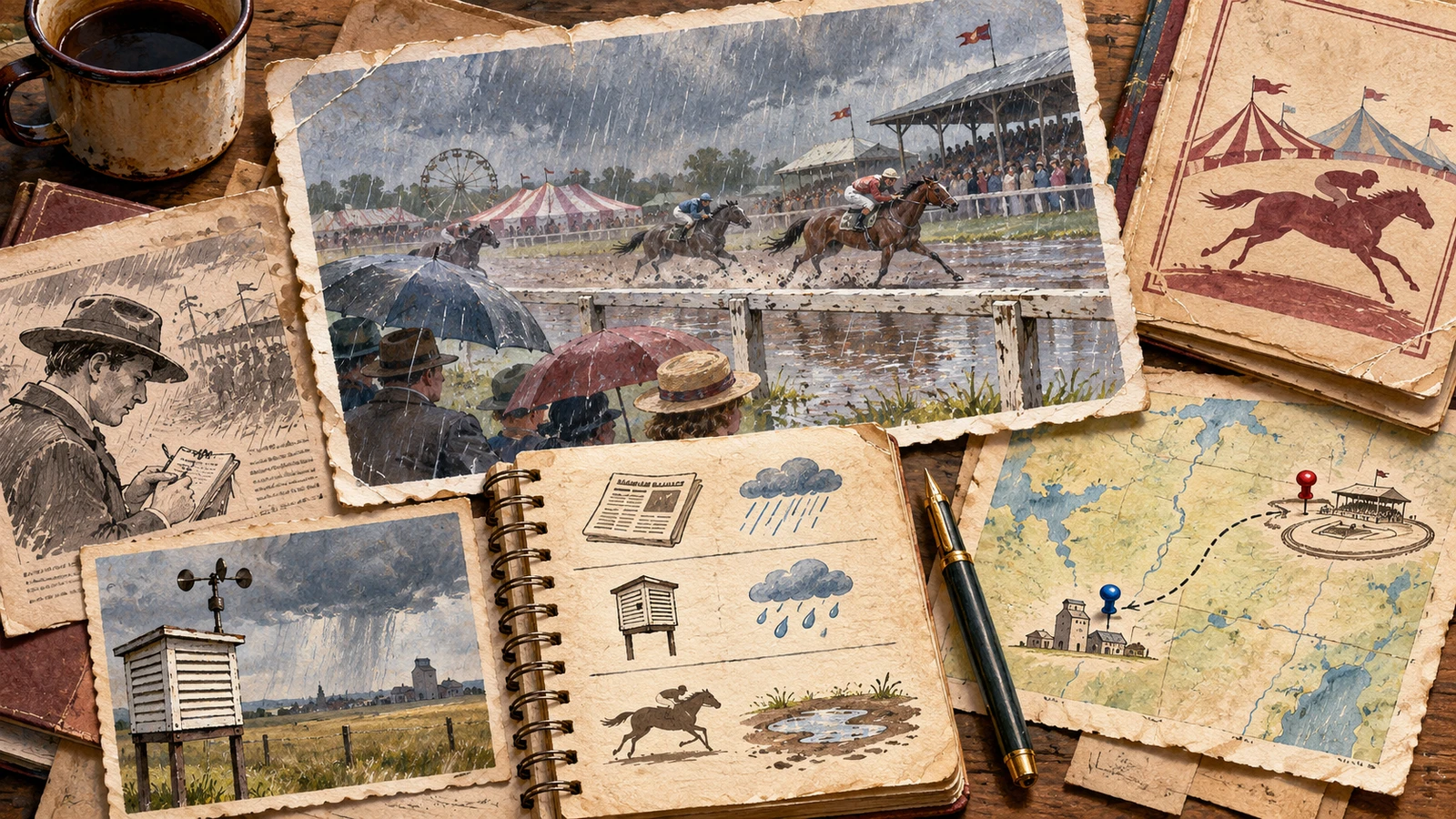
The fair photo shows standing water behind the rail. A family story says it rained during the final. Check when the photo was taken and see what the race report says. A weather station can add useful context, but it records conditions at its own location.
Start with evidence close to the track
In the fictional example, a local reporter describes showers before the second heat. A station in the nearest town records rain that afternoon. The two sources fit, while the exact amount on the fairgrounds remains unknown.
Use the race date and locate a suitable station in the historical weather archive. Check how far it is from the location and whether the data are daily or hourly. A daily total cannot tell you which heat saw the rain.
Read the programme and result for a note about track conditions or a delay. If the organizer only described a pause, leave the reason open unless another source supports it.
For the archive, write something like “Local report mentions showers before Heat 2. Nearby station recorded rain that day.” Both facts keep their source and level of detail.
| Source | What it can establish |
|---|---|
| Local race report | Observation of showers before Heat 2 |
| Nearby station | Rain measured at that station on the date |
| Track notice | An official delay or surface note, if published |
Add regional measurements with their location
- Match date and geography
- Identify the track and actual race date.
- Check the station location and reading interval.
- Write the observation with its source
- Keep track notes and weather readings distinct.
- Leave any unconfirmed cause of delay open.
Questions and answers
- Can a station record prove it rained at the track?
- It establishes its own reading. For the track itself, look for an observation near the event.
- What if the station shows no rain?
- Check the time and location of both sources. Conditions may differ across the area.
- Should I report the amount of rain?
- If you use it, give the station and period with the number.
Environment and Climate Change Canada historical climate data