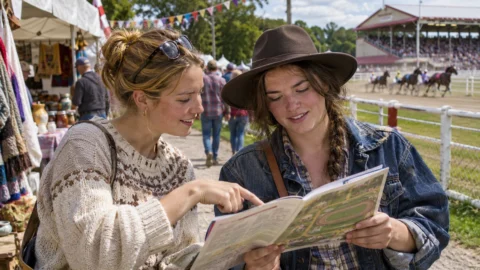
Read a prairie fair schedule without missing the race you came for
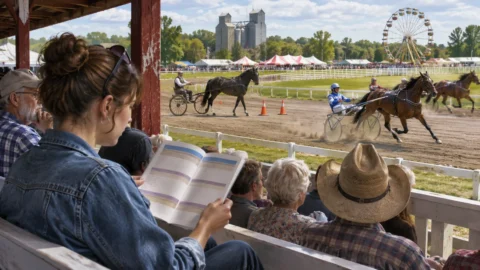
Pick the fair day, find the track on the grounds map, and work back from an event time. The example keeps gate hours and race starts separate.
Pick the fair day, find the track on the grounds map, and work back from an event time. The example keeps gate hours and race starts separate.
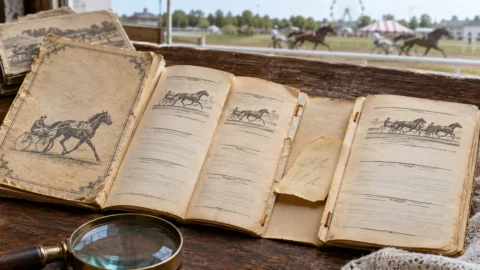
Describe the race card you have, mark the gap by page number, and record any replacement leaf as a separate source in the archive.
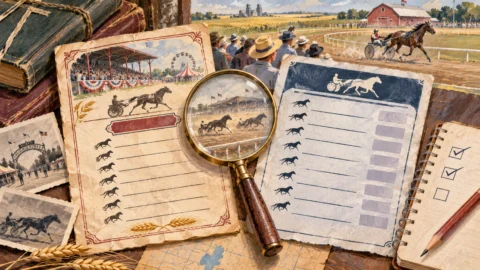
Use an invented race card and bookmaker listing to tell who was due to start, which result the listing names, and what each document can establish.
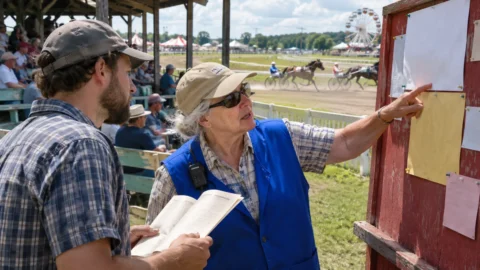
Check a track board, a dated organizer’s update and the current programme. A fictional example shows how to record an amended start time.
Use a fictional schedule to distinguish a demonstration, a qualifying heat, and a final. Check the results section before describing an event as scored.
Describe a historical wager receipt as an archival object. Keep the race identity, visible wording, and missing settlement evidence distinct.
Read a handwritten annotation alongside the race card and result sheet. Preserve the words and the identity of the record you used.
Compare a print stamp, issue caption and negative envelope. See which clues name a photographer and which point to a studio or publisher.
Read a historical placing alongside a fictional bookmaker slip and identify what remains unknown about the rules and individual settlement.
Keep a short checklist for timed events, fair entrances and daily travel. The fictional weekend shows why Saturday’s plan may not fit Sunday.