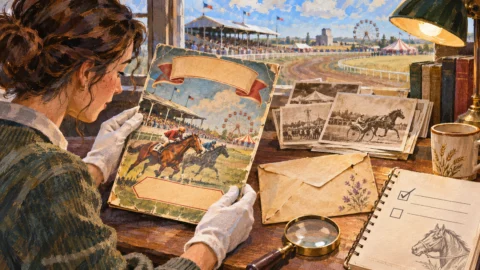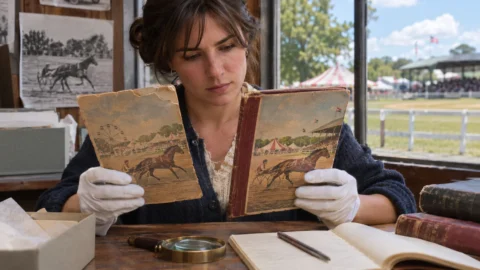
Two fair programmes, two stories. Compare the editions
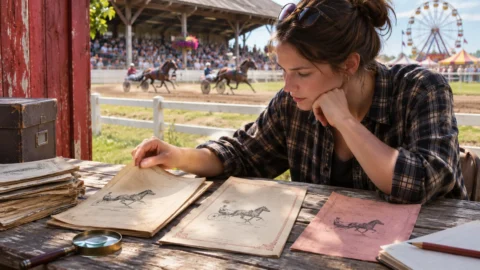
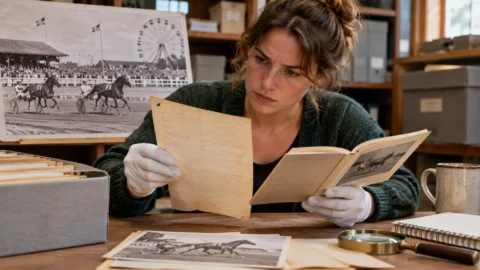
Lay two historical programmes side by side. Check dates, race numbers and printing clues, then describe the differences before drawing a conclusion.
Lay two historical programmes side by side. Check dates, race numbers and printing clues, then describe the differences before drawing a conclusion.
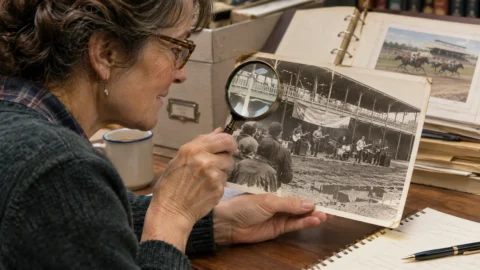
Combine the print’s own clues with dated programmes and similar images. Use an estimated range or an open date when the evidence stops short.
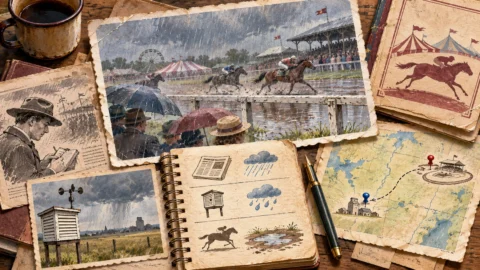
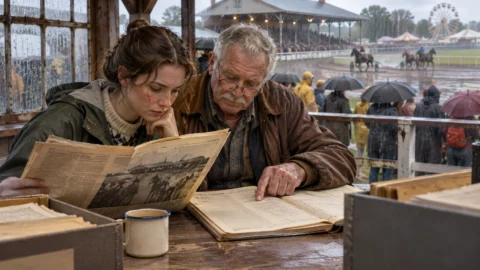
Match a race date and place to contemporary accounts and a nearby weather station. Distinguish what was recorded on the track from regional data.
Read two invented fair schedules for edition notes, confirmed venues and later updates. Use the status the organizer actually assigned.
Read a fictional marked-up card for names, numbers and handwritten changes. Check later records for what actually happened at the start.
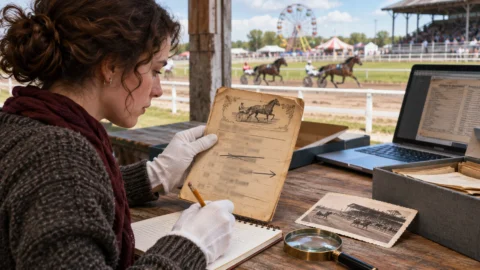
Track the origin of a loose results page through its header, date, race and publication details. Record whether you have an original or a later copy.
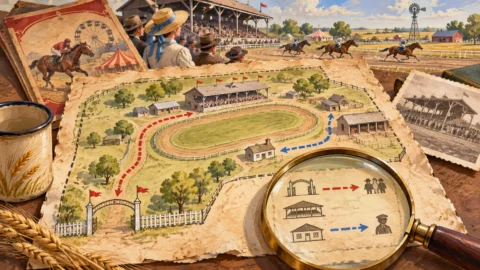
Read a historical map for its public gate, grandstand and viewing areas. Separate details on the old plan from current access directions.
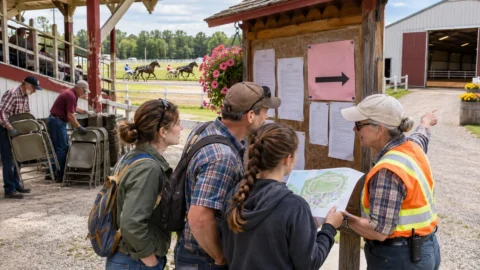
Read a practice venue amendment for the correct session and entrance. Keep the previous location as context and give visitors the new directions.
Compare a fictional local article and a track record. Use each source for the facts it supports and leave any unresolved detail visible.
Use a short catalogue record that shows what survives, which details are confirmed, and what a later researcher could still look for.